A thousand heroes on one screen: how Northwyn is built for massive PvP
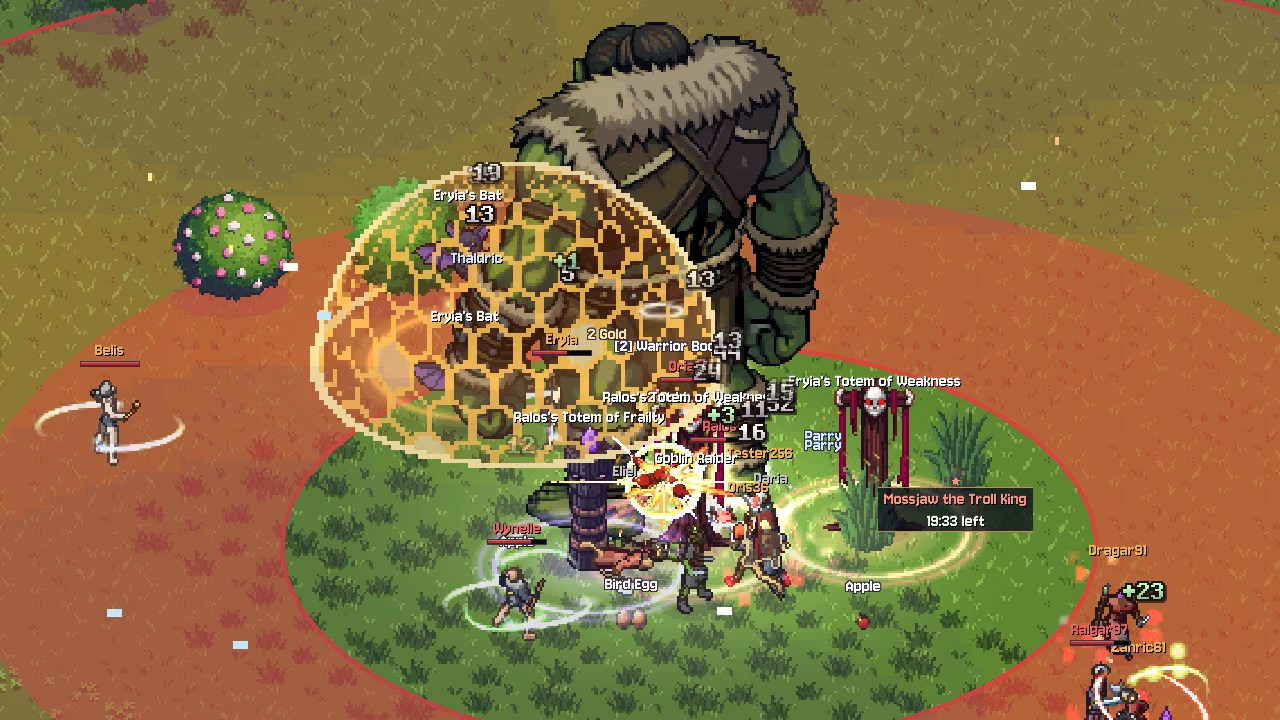
Northwyn is made for huge open-world battles. We filled a single screen with over a thousand characters and the game held up. Here is how the server, the network and the renderer make room for the crowd.
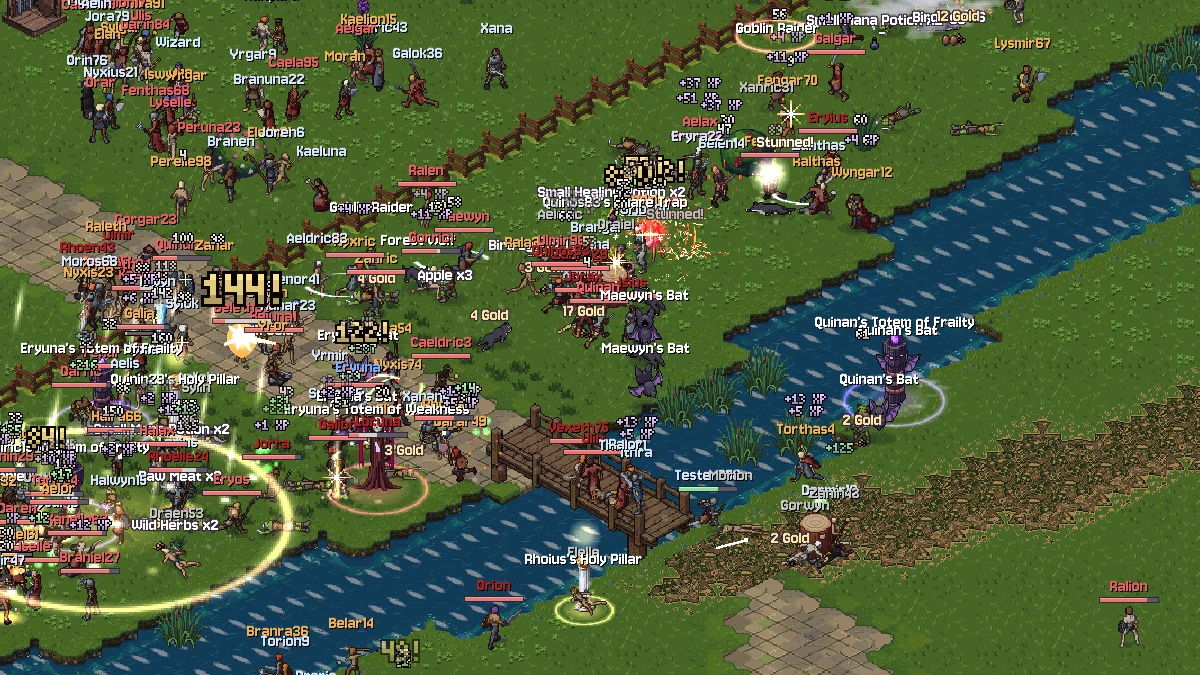
Northwyn is an MMORPG built around massive PvP: guilds clashing at a river crossing, an ambush waiting at a Rift portal, a whole town pouring into the fields to hunt down one Murderer. Fights like that only work if the game holds up when everyone shows up at once. So before adding more content, we spent weeks trying to break it.
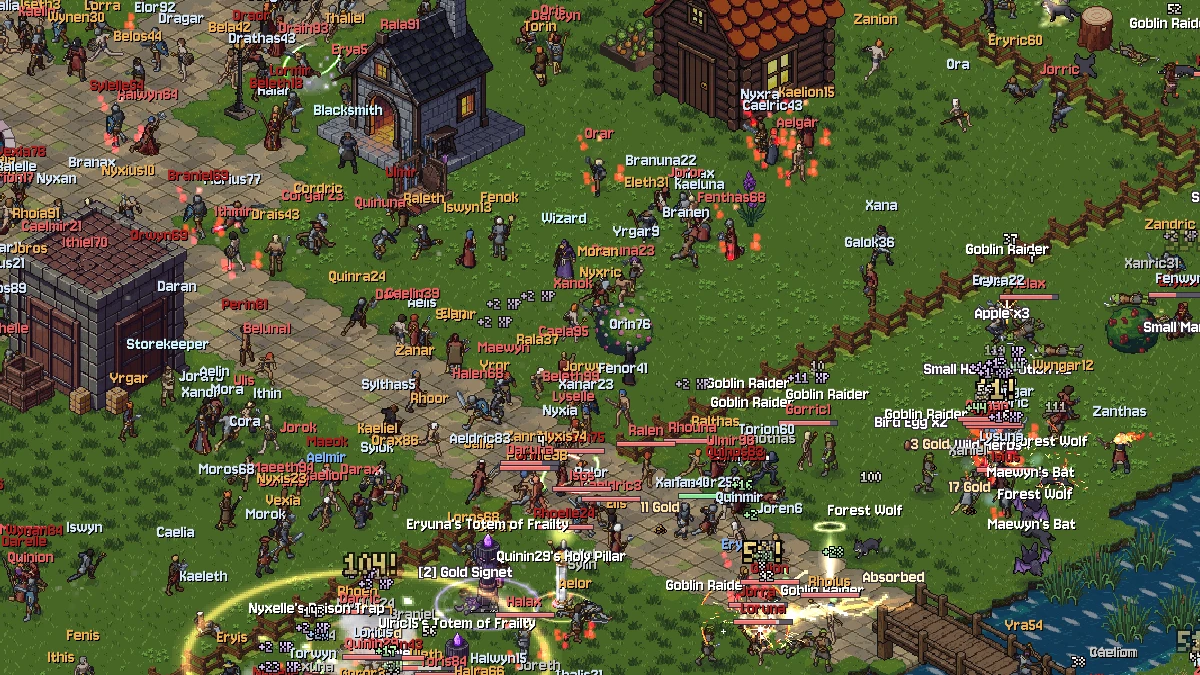
The result: over a thousand characters on a single screen, with the game client still running above 30 frames per second and the world server keeping its tick. This post is about how we got there.
Bots that play like players
You can't test a crowd you don't have, so we built load test bots. They are not mannequins. Each bot is a real character of the server, with its own account, level, gear, gold and reputation, and it plays through exactly the same server paths that a player's keys and clicks go through: attacking, casting skills, drinking potions, rolling, warping between maps.
Left alone, a bot picks a goal and goes for it: hunting monsters of its level, exploring, resting in town, joining parties (with real players too), diving into Rifts, and dueling or hunting other players on PvP realms. Bots level up, loot and save their progress like anyone else. A world server can run up to a thousand of them, and it measures itself while they play: frame time, the bots' own cost, bandwidth and memory, every few seconds.
Only send what you can see
The first rule of a crowded server is that nobody needs everything. Each player only receives the characters around them: about a screen and a margin around their own character on the same map, plus their party anywhere on that map. Combat messages (swings, damage numbers, skill areas) follow the same rule, so what a fight costs each player depends on the crowd around them, not on how many people are online.
There is a twist specific to isometric games. Unreal Engine measures relevance from the camera by default, and our camera sits far back along the depth axis. We measure the distance on the screen plane from the character instead, so what you receive is what you see.
Every map lives on the same world server, far apart from the others, so players on different maps never cost each other anything on the network.
Finding neighbours fast
A monster deciding whom to attack, a Meteor landing on a crowd, two players drifting apart after standing on the same spot: all of them ask "who is near this point?". With a thousand characters, scanning everyone for every question would eat the server alive.
Instead, each map keeps a coarse grid of 8 by 8 tile cells. Every character files itself into its cell each tick, and range questions only look at the few cells around the point. The answer costs about the same in an empty field and in the middle of a siege.
The path that wasn't there
Our worst slowdown came from somewhere unexpected: pathfinding. When a target stands somewhere it can't be reached (across a river, beyond a cliff), a path search has to explore the whole map before giving up, and fighters search again several times a second. With bots chasing foes they could never reach, the server ran out of time at just 200 bots.
The fix was to know the map. Each map is split once into its connected walkable regions, and nobody chases a foe in another region; a chase that makes no progress is dropped for a while. With that in place, the same free-roaming test ran 700 bots hunting, travelling, grouping and fighting each other across every map, all inside the server's tick budget.
Drawing a thousand heroes
Every character in Northwyn wears what it has equipped: helm, armor, weapons, wings, hair, up to twelve layers each. Drawing twelve sprites for each of a thousand characters would bury the renderer, so a character is a single quad: one shader reads every equipped layer from compact texture atlases and keeps, pixel by pixel, the part closest to the camera. Packing the parts into atlases also cut their memory from about 1.2 GB to 67 MB.
The ground and props of each map are drawn in large instanced batches, the dedicated server draws nothing at all, and each client only builds the map its player is standing on.
Instant for you, fair on the server
The server decides every fight, but you never wait for it to see your own moves. Your movement, your rolls and the skills you cast in place play the moment you press the key, and the server replays your inputs under the same rules to confirm them. None of this adds network traffic or server work per player, which is exactly what you want when a thousand players are pressing keys at once. Boss area attacks are even judged where you stood on your own screen, one ping after the impact.
Small details matter in a crowd too. Bots think on staggered timers, so a thousand of them never decide on the same frame, and sounds that fire in bursts (fifty blades landing at once) collapse into a single play.
What's next
A thousand characters on one screen is where we are, not where we stop. Next on the list: a spatial replication graph so the server spends even less on each player, more bandwidth for packed screens so movement stays smooth in the biggest crowds, and lighter per-character work on the client. We will run these tests again with real players during the closed playtest, and we would love you to be part of the crowd.